
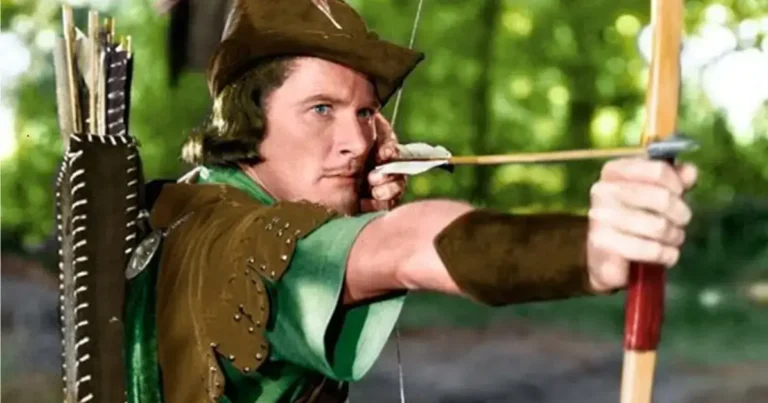
In English mediaeval days, there was once this chap called Robin of Locksley, a former nobleman now cruelly dispossessed of his estates by a villainous and vindictive King John.
Forced to flee for his life, Robin took refuge in Sherwood Forest in the shire of Nottingham, gathering around him a band of fellow fugitives, including Will Scarlet, Little John, Friar Tuck and – latterly – his squeeze, Maid Marian.
Now known as Robin Hood and his Merry Men, the band specialised in relieving better heeled travellers on the King’s roads of their valuables for redistribution to the community’s needy.
Nah. Just joking. While undoubtedly there were predatory small bands of purse-lifters, there was never a Robin Hood, Friar Tuck or Maid Marian. It’s all a load of cods – a jolly fireside tale embellished over centuries as a diversion for long winter nights.
Nevertheless, I would wager that many – while accepting that probably the Robin Hood yarn has been glossed here and there – still think it’s about characters who actually existed.
The Bard’s Mysterious Double Life
There’s an even better fairy story from the annals of English history – a mystery far better than anything Agatha Christie ever concocted. It concerns a fellow called William Shakespeare – a probably illiterate yet industrious country grain merchant and general wheeler dealer. All the while, he was purportedly leading a double life enmeshed in all aspects of London’s busy Elizabethan theatre world, including finding time to create a monumental body of literature universally acknowledged as peerless. It’s as fine a tale as Robin and his Merry Men. Nay – better! And there are libraries full of earnest academic tomes to help spin the yarn.
But then put a few extra ingredients into the mix. Namely, that in fraught and dangerous Elizabethan days, even a slight slight on the powers-that-be could spell a gruesome death. And that the name ‘William Shakespeare’ was a well known pseudonym (for arcane reasons) used by writers dealing with sensitive topics who wished to remain anonymous for the above reason. And that there was this Stratford-on-Avon dude and part-time drama fan-boy who occasionally took time out from his boring business dealings to run a few side hustles in London’s bustling theatre world, whose name just happened to be William Shakspere. And then you have the recipe for a ripping yarn based on mistaken identity. (‘Shakspere’, and its many close variations, was a then common surname, with nearly a hundred or so recorded versions.) It’s a never-ending yarn, now four centuries old – and counting! But that’s another story, for another time.
The Stories We Tell Ourselves
The point is, we construct stories all the time for all sorts of reasons, The Shakspere/Shakespeare story is simply a story about some one – or ones – who concocted stories. Which is a long story.
Things are no different down in little old New Zealand, or Aotearoa, or whatever you want to call it. Call it Ralph, if you like. We, too, have made our own stories.
The Great Migration Myth
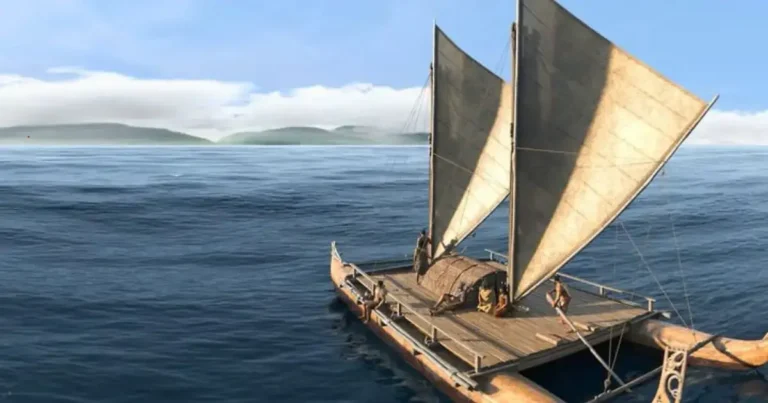
Not so long ago, we had a story about how humans kicked off here. So there was this bunch of Pacific Islanders, habitants of some of the multitudes of islands pin-pricked around the vast Pacific Ocean covering a third of the entire planet. But at some point, some of these islanders decided a third of the planet wasn’t enough elbow room, so they packed their toothbrushes and a few kitties of yams and kumaras into a flotilla of mighty wakas and took off down south.
Although it’s moot whether they actually intended heading south or just ended up there by accident. This was all back circa 1200AD, and it was a long and arduous voyage, so the story goes. The waka voyagers were seriously travailed by hunger, thirst, treacherous southern oceans and the cruel elements. This version was epitomised in a 1899 oil painting based on a previous famous European painting, “The Raft of the Medusa”, showing wretched ship-wrecked survivors in extremis.
But then, as every school kid knows, at last came the historic sighting of the long white cloud on the horizon, with the blessed relief of landfall beckoning. The new colonisers then set up shop in this vacant new world and eventually spread throughout the land, albeit with occasional visits to and from Hawaiiki, the Pacific homeland of these Vikings of the Pacific – just one of the terms ascribed to them.
When the Tall Ships Arrived
Despite initial hard times, the newcomers put their noses to the grinding stones and carved out the wherewithals for survival in this challenging new world where it wasn’t always summertime and the living easy. Later, voyagers of a slightly different appearance turned up in outlandish other waka powered by clusters of billowing dust-covers.
They too soon spread throughout the land, merging and acculturating – to use the official term – with the existing inhabitants. And they, in turn, prospered too. So much so that – because the later arrivals set up a regular shipping service – many hundreds of thousands more of their fellows soon joined them
Nek minnet, by sheer numbers, the later arrivals were more or less running the show. And even to the extent of helping the originals write their own fairy tales about how we all ended up in this small southern continette. Many of these stories – now that the Guttenberg press had arrived in the country – ended up in a well-meaning regular publication for school kiddies called ‘The School Journal’. Needless to say, some of these tales had been a tad embellished along the way – even to the extent that the original inhabitants wondered why they themselves had never heard these particular yarns about how their own ancestors had ended up in this land of the elongated pale cloud.
DNA Rewrites the Script
But to cut a long story short, in the fullness of time, as the Scientific Age scurried afoot, a new methodology emerged broadly based on the discovery of this thingy called DNA. DNA proved a miraculous way to be able to trace people’s ancestry, and therefore to track patterns of migrations as homo sapiens of all denominations made their merry way around the planet.
Long story short, in conjunction with other fiendishly clever tricks like carbon-dating, and on-going archaeological discoveries, it soon emerged that a goodly portion of all the olde original settlement theories were as fanciful as the tales of Mr Hood and his Merry Men, and the miracle grain merchant from Stratford-on-Avon, Willy Shakspere. Mostly a load of cods.
Turns out that the many peoples who turned up here weren’t all squashed into a pod of waka which has sailed from a single source at a certain time, but had washed up at various times from just about every corner of the Pacific – and beyond – over a timeline vastly at odds with the Official Narrative. But – old story – you can bet your bippy that anything that betokens Official Narrative has a bevy of vested interests tenaciously clinging to it.
And they like the Narrative the way it is, thankyou very much! It’s much more profitable that way.

Frank Greenall has been a copywriter, scriptwriter, artist, political cartoonist, adult literacy tutor and administrator, and Whanganui Chronicle columnist for many years, amongst numerous other sundry occupations. His cartoons and articles have appeared in most major NZ newspapers at various times. He has a BA in politics and a Masters in adult literacy/numeracy. https://stevebaron.co.nz/author/frankgreenall/

Sarah says:
Really fascinating take on how historical myths get crystallised into “facts” over generations, Frank! As someone whose parents grew up with completely different foundational stories in Malaysia, I’m always struck by how every culture has these larger-than-life figures that probably never existed but serve such an important narrative purpose. The Shakespeare authorship question is particularly intriguing – it does seem wild that someone with his background could have such intimate knowledge of court life and classical literature. I’m curious though, do you think it matters whether these stories are “true” if they’ve shaped so much of our cultural identity? My generation seems pretty comfortable with the idea that most historical narratives are constructed anyway.
Frank Greenall says:
Hi Sarah..
Yes, you’re right.. Often it’s neither here nor there whether these historical fables are “true” or not as they serve all sorts of secondary purposes such as reinforcing cultural identity and so forth. Except that often the truth can be more interesting than the fiction – the ‘Shakespeare’ authorship question being a case in point.
Many are unaware that this has been a source of contention ever since the 1623 publication of the collection of ‘Shakespeare’ plays now known as the First Folio. A commentator of the time described it as “fishy”, and to delve into the whole political, artistic and social milieu of the mainly Elizabethan era from which it derived is a fascinating journey.
If interested, for tasters I very much recommend checking out the various video clips of Alexander Waugh (sadly recently deceased, and incidentally also the grandson of Evelyn Waugh).
Waugh’s scholarship on the whole subject and general era is stupendous, plus he’s a brilliant communicator to boot.
Just Googling something like ‘Alexander Waugh Shakespeare authorship’ will serve as a portal into his many clips on the whole issue.
Many regard questioning the ‘Shakespeare’ authorship as some sort of heresy, as though it’s an attack on the works themselves. But the works stand on their own merits regardless, just as they have for the last 400 years or so.
It’s the “fishiness” about how they ended up in the First Folio in the first place that makes it all so intriguing, and why it all adds to being one of the best ‘whodunnits’ going.